


Syllabus: GS2/Governance/GS3/Energy
Context
- The government has lifted emergency curbs it had imposed on the supply of natural gas during the West Asia crisis in March.
Background
- On March 12, the Union Minister for Petroleum and Natural Gas told Parliament about the “immediate priority sequence”.
- Domestic piped gas to homes and CNG for vehicles receive 100% supply with no cuts.
- Industrial and manufacturing consumers will receive up to 80% of their previous six-month average.
- Fertilizer plants will receive up to 70%, protecting the agricultural input chain ahead of the sowing season.
- Refineries and petrochemical units absorb a managed reduction, with that gas redirected to higher-priority sectors.
- The government cited “ceasefire and negotiations” and the resumption of “sea traffic through the Strait of Hormuz” to restore gas supplies.
Which sector uses LNG the most?
- Fertilizer plants are known to consume a bulk of India’s LNG. A little less than 30% of natural gas use goes into making fertilizers, while power plants account for 13% and city gas distribution 21%.
- Urea, which has around 46% of nitrogen, is the most common nitrogen fertilizer. It is produced by converting natural gas (methane) into ammonia and then combining it with carbon dioxide.
India’s Energy Demand
- India is expected to account for over 23% of global incremental energy demand by 2050, the highest for any country.
- In order to meet this growing demand, India has focused on strengthening its energy systems through policy reforms, infrastructure expansion, and cleaner energy pathways.
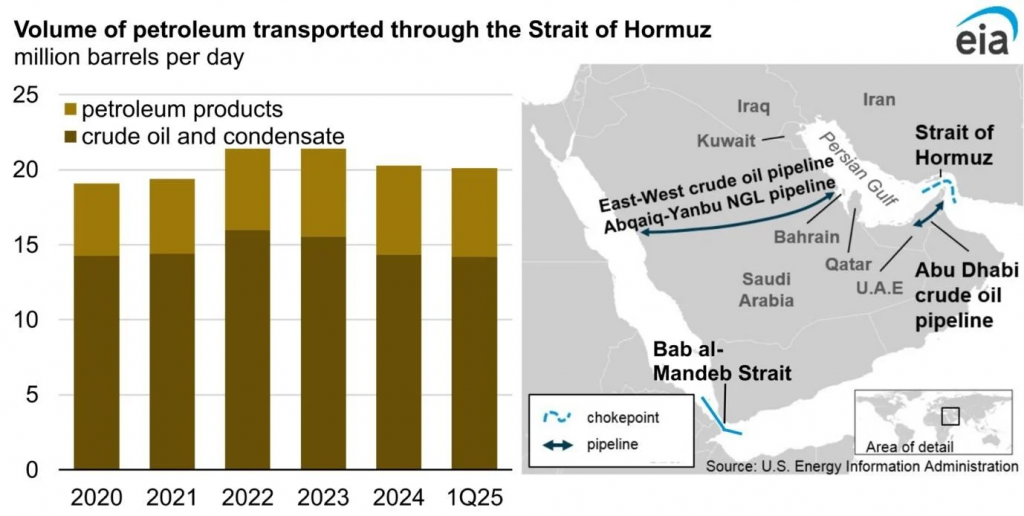
- India’s LPG imports account for around 60% of domestic consumption, and about 90% of those imports normally move through Hormuz.
- Thus, roughly 54% of normal LPG availability is under direct exposure if the corridor remains shut.
India’s Efforts to Strengthen Energy Security
- Oilfield (Regulation and Development) Amendment Act, 2025: It modernises India’s upstream regulatory framework by simplifying procedures, enabling integrated energy development, and strengthening investor confidence.
- The reform aims to enhance domestic oil and gas production, improve energy security, and support a stable, transparent policy environment.
- Petroleum and Natural Gas Rules, 2025: It provides a modern and transparent regulatory framework for the exploration and production of oil and natural gas.
- Unified Pipeline Tariff (UPT): Introduced in 2023, under “One Nation, One Grid, One Tariff,” the UPT was launched to address regional disparity in gas transportation costs.
- Fuel and Gas Infrastructure: The nationwide fuel retail network expanded from around 52,000 outlets in 2014 to over one lakh by 2025, improving last-mile fuel availability across urban and rural areas.
- Under the vision of One Nation, One Gas Grid, the natural gas pipeline network expanded to over 25,400 km.
- Electric Mobility Infrastructure: Electric mobility infrastructure expanded with 8,932 EV charging stations installed at retail outlets under Faster Adoption and Manufacturing of (Hybrid &) Electric Vehicles (FAME) Phase-II, along with over 18,500 additional charging stations set up by Oil Marketing Companies.
- The ethanol blending programme has resulted in foreign exchange savings of about ₹1.59 lakh crore, reduction of 813 lakh metric tonnes of CO₂ emissions, and substitution of 270 lakh metric tonnes of crude oil since 2014, reflecting the role of biofuels in reducing import dependence and emissions.
- Sustainable Aviation Fuel (SAF): The government has set indicative blending targets for SAF in Aviation Turbine Fuel for international flights at 1% from 2027, 2% from 2028 and 5% from 2030.
- India’s participation in platforms such as the Global Biofuel Alliance (GBA) and the G20 Energy Transitions Working Group reflects its emphasis on practical and inclusive approaches to energy transition.
- India Energy Week serves as an international platform for dialogue among governments, industry, financial institutions, and technology providers.
- Alternative Sources: India is now securing LPG from alternative sources, including the United States, Russia, Norway, and Canada.
Conclusion
- India’s energy landscape has undergone a significant transformation in recent years, supported by policy reforms, infrastructure expansion, and targeted clean energy interventions.
- Progress across hydrocarbon governance, gas connectivity, fuel and mobility infrastructure, biofuels, and clean cooking has strengthened energy access, improved system resilience, and reduced emissions intensity.
- These developments reflect a transition approach that emphasises scale, implementation, and inclusion while responding to rising energy demand.
Source: TH
Previous article
Allahabad High Court Upholds Uniform Legal Marriage Age
Next article
News In Short 08-07-2026
